GAZ1 Kelvin
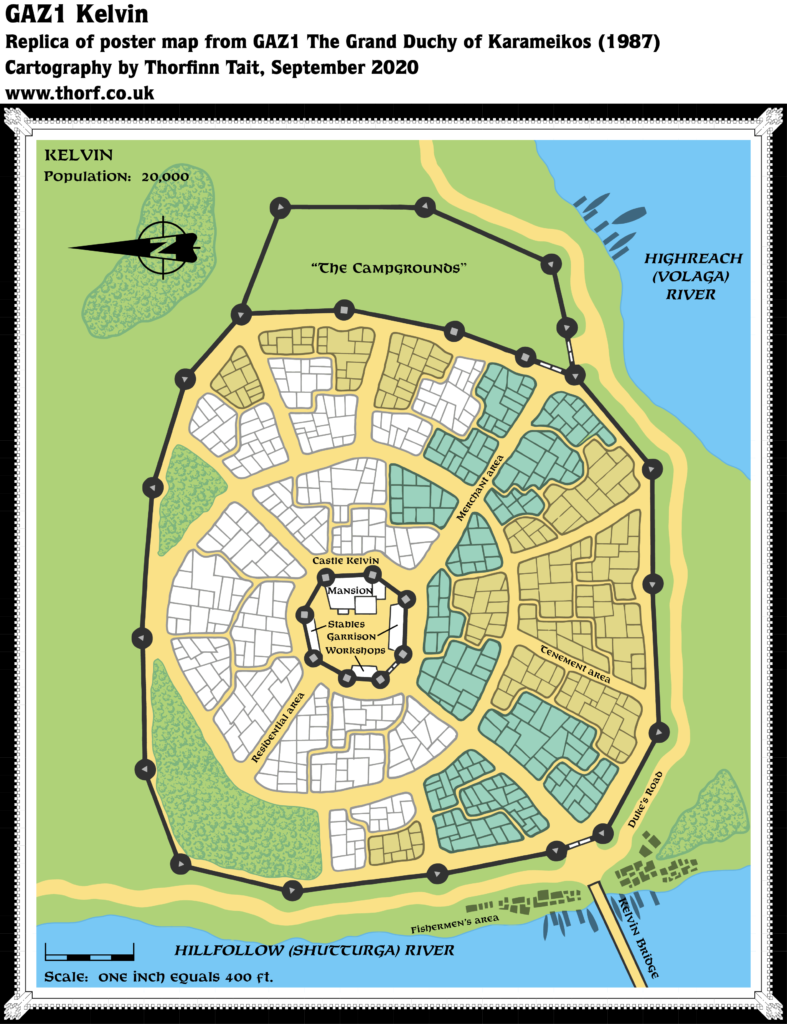
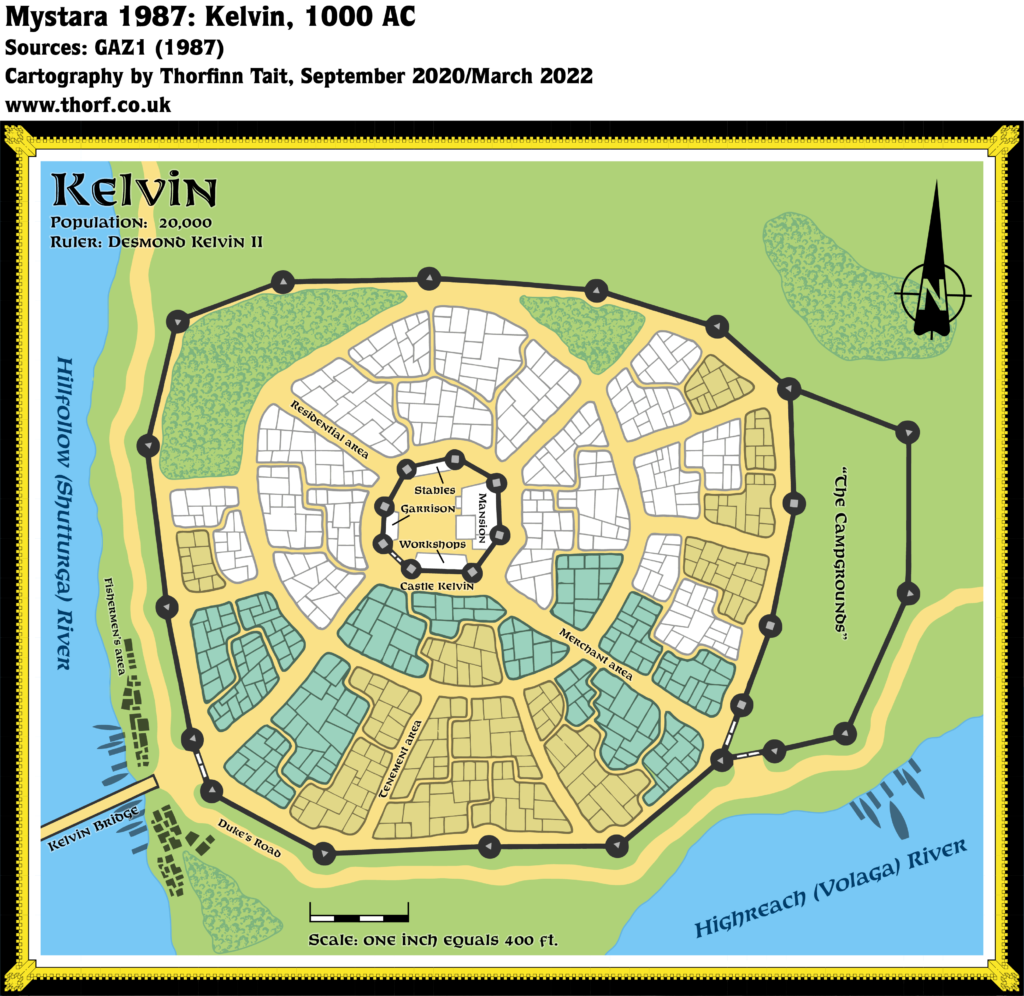
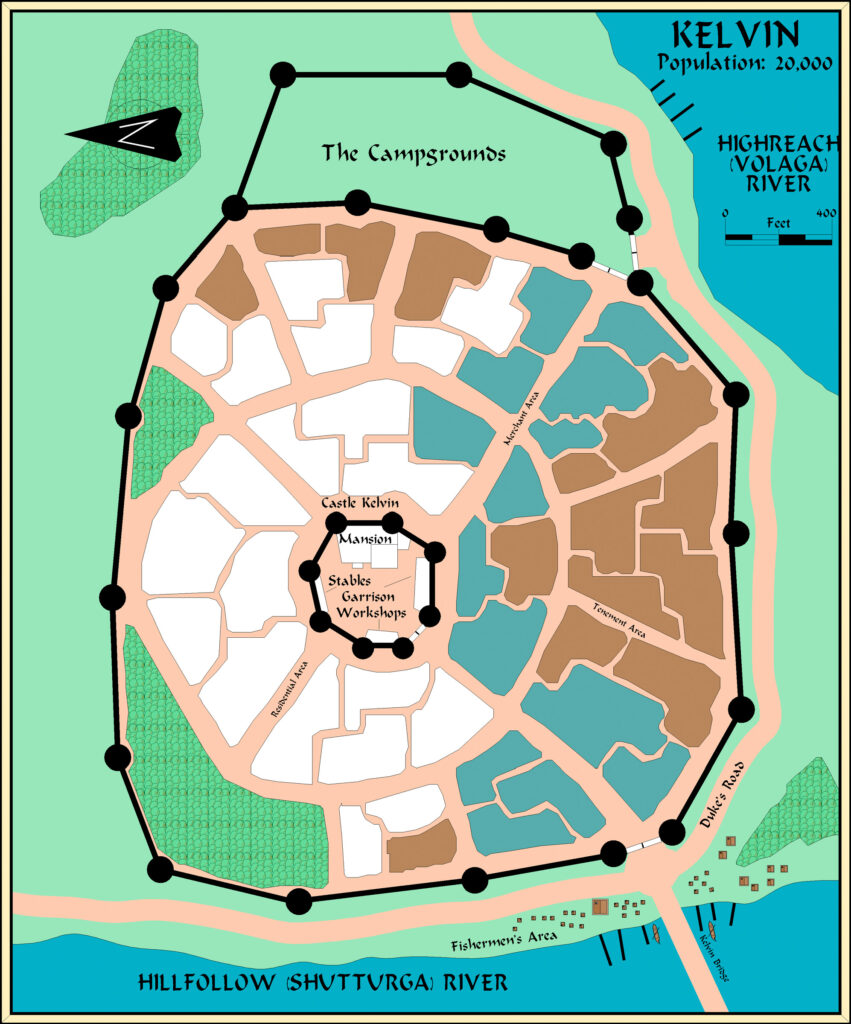
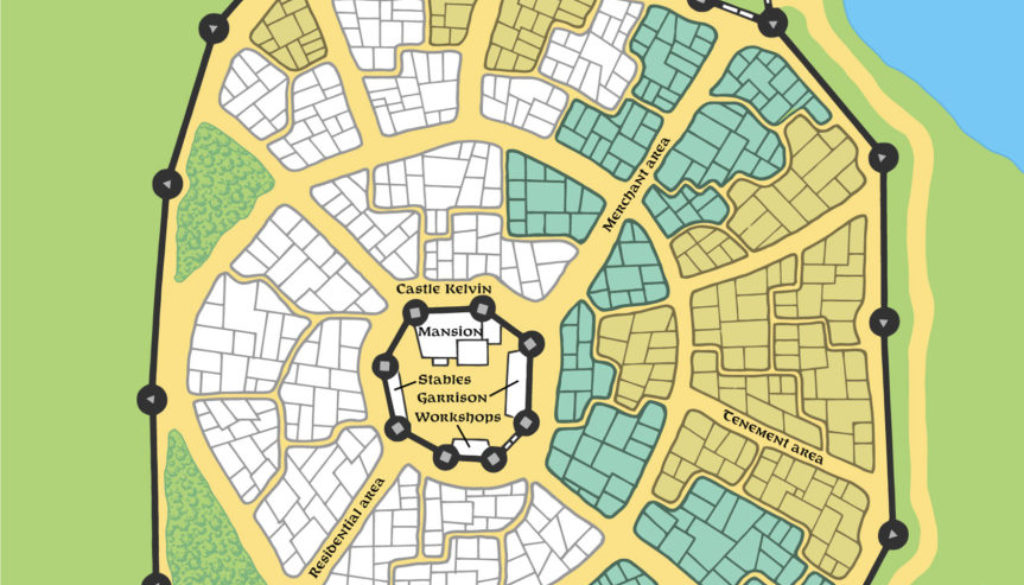
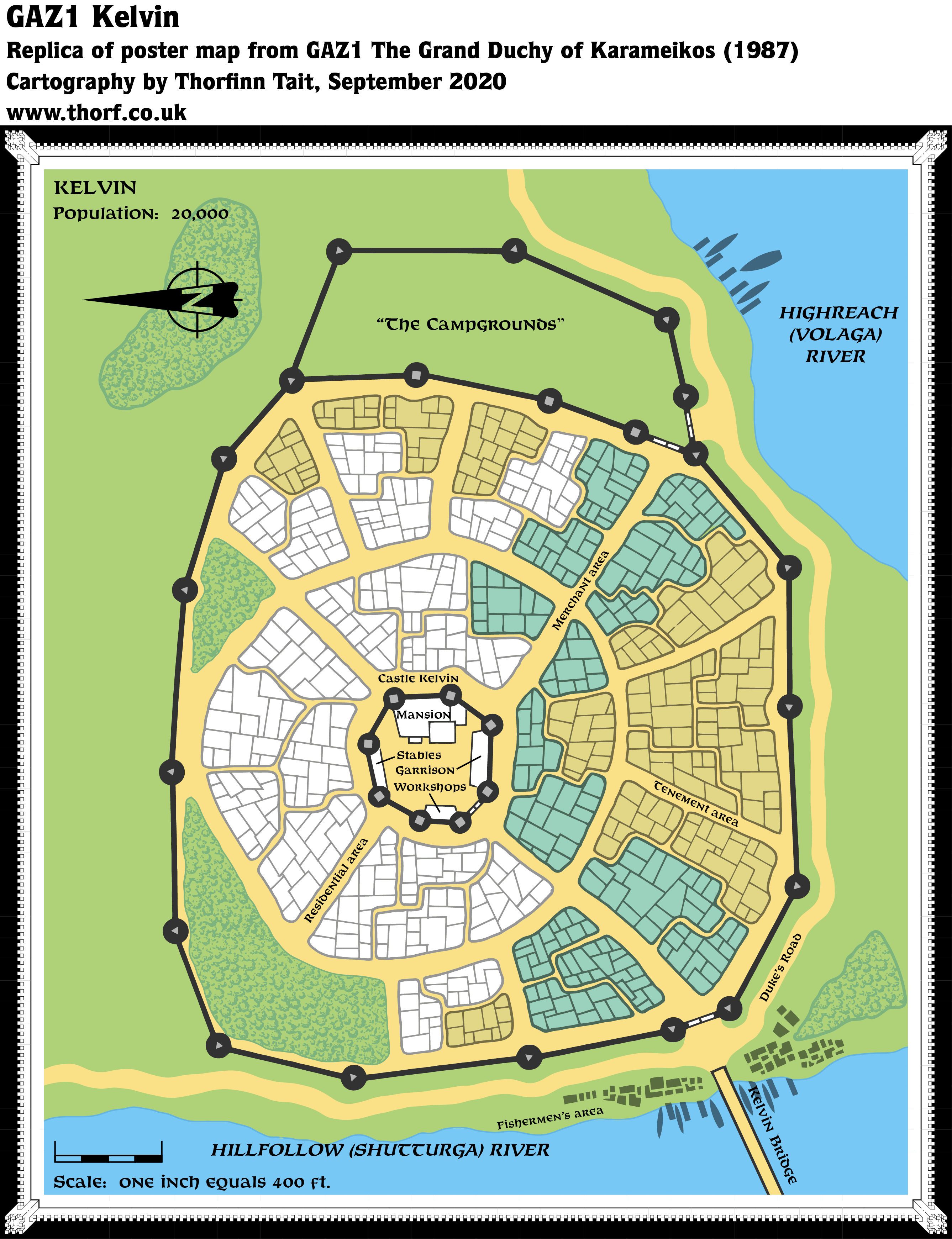
One of the many and welcome innovations of the Gazetteer series was the numerous town maps that came with each book. GAZ1 started this trend, with a new map for Kelvin, as well as revised maps for Specularum and Threshold.
This map is significant from a geographical perspective, as it details Kelvin’s precise placement at the conjunction of the Volaga and Shutturga Rivers — although this somewhat contradicted the hex map featured on the same poster map, which placed Kelvin 8 miles north of the confluence.
Replica Map (September 2020)
Sources
- GAZ1 The Grand Duchy of Karameikos (1987) (PDF at DriveThruRPG)
- Poster map (Cartography by Dennis Kauth, David C. Sutherland III, Ron Kauth)
Chronological Analysis
This is a town map. It was published in April 1987. The updated version of this map has not yet been released. See also Appendix C for annual chronological snapshots of the area. For the full context of this map in Mystara’s publication history, see Let’s Map Mystara 1987.
The following lists are from the Let’s Map Mystara project. Additions are new features, introduced in this map. Revisions are changes to previously-introduced features. Hex Art & Fonts track design elements. Finally, Textual Additions are potential features found in the related text. In most cases, the Atlas adopts these textual additions into updated and chronological maps.
Additions
- Almost Everything — Since this is the first ever map of Kelvin, everything is new here. Of most note is the fact that it sits at the fork where the Shutturga and Volaga rivers meet. A few things of note: Castle Kelvin and Kelvin Bridge.
Hex Art & Fonts
- Art — Gazetteer town map style, with subdued but clear colours and a palette similar to the hex maps. The art itself was mainly simple line art, with the occasional use of familiar patterns such as for the forests.
- Fonts — Feinen.
Textual Additions
- Historical Notes — The Gazetteer provides an interesting point about Kelvin’s history: “Under about twenty feet of accumulated earth and silt are the remains of the village of Lavv, the actual historical site which appears in the “Song of Halav.” When building Castle Kelvin, workers stumbled across some of the ruins and ignored them or tore them up for building materials; no one in Kelvin is aware that this city stands on the site of the historic village. If you wish, you can have enough of the old buildings survive down below to constitute a catacombs-type dungeon, filled with the relics of this bygone age . . . and perhaps haunted by the spirits of the warriors of that time.” (GAZ1 page 39a)