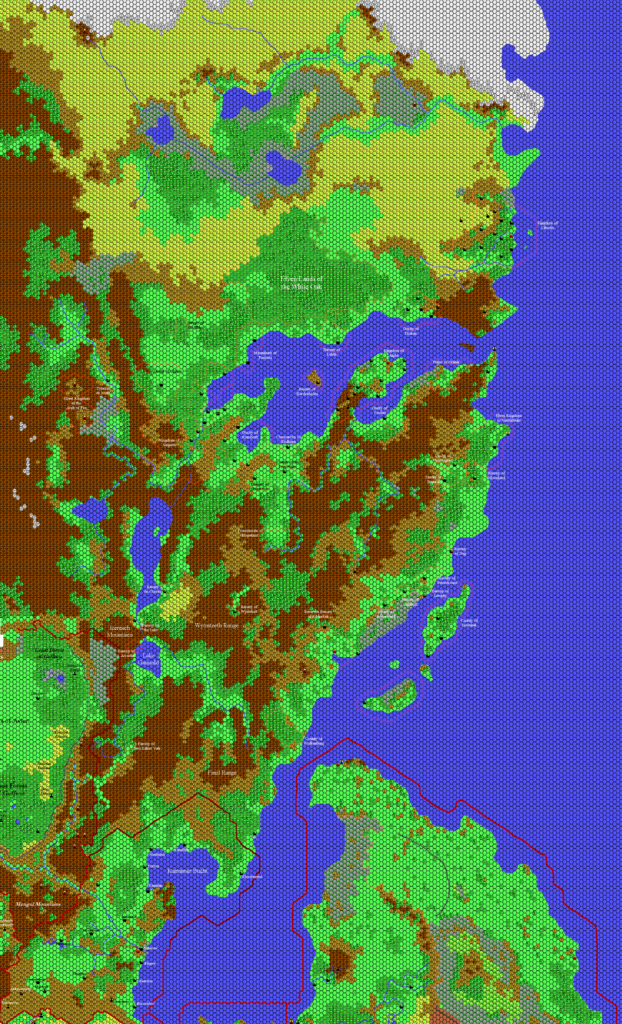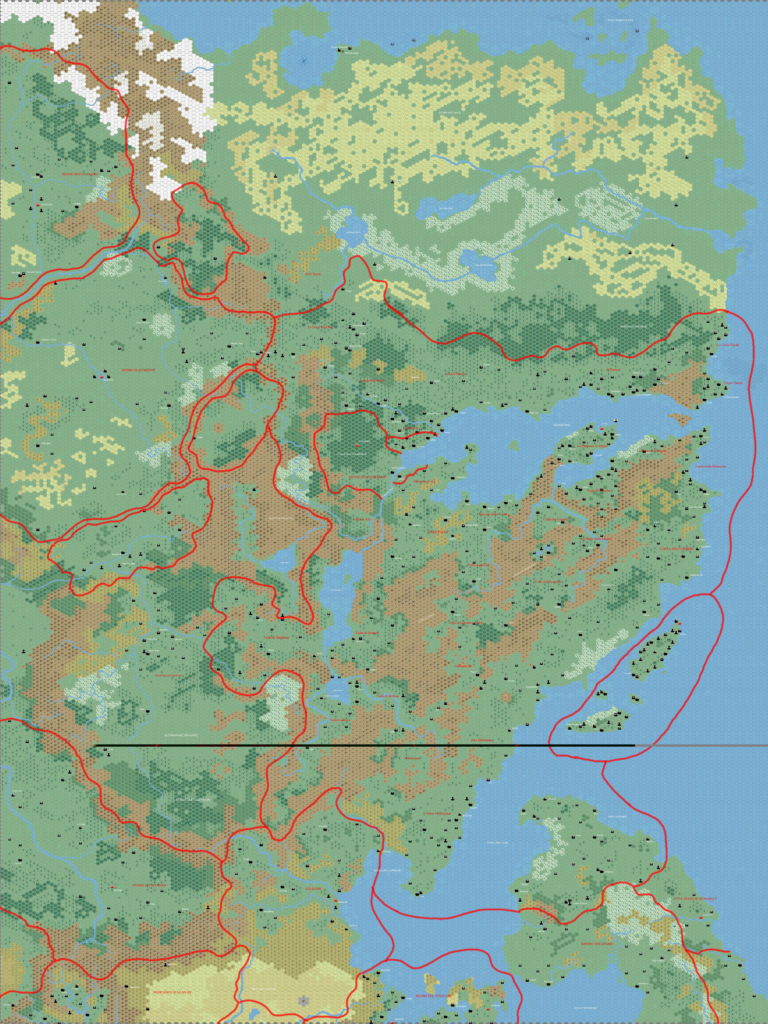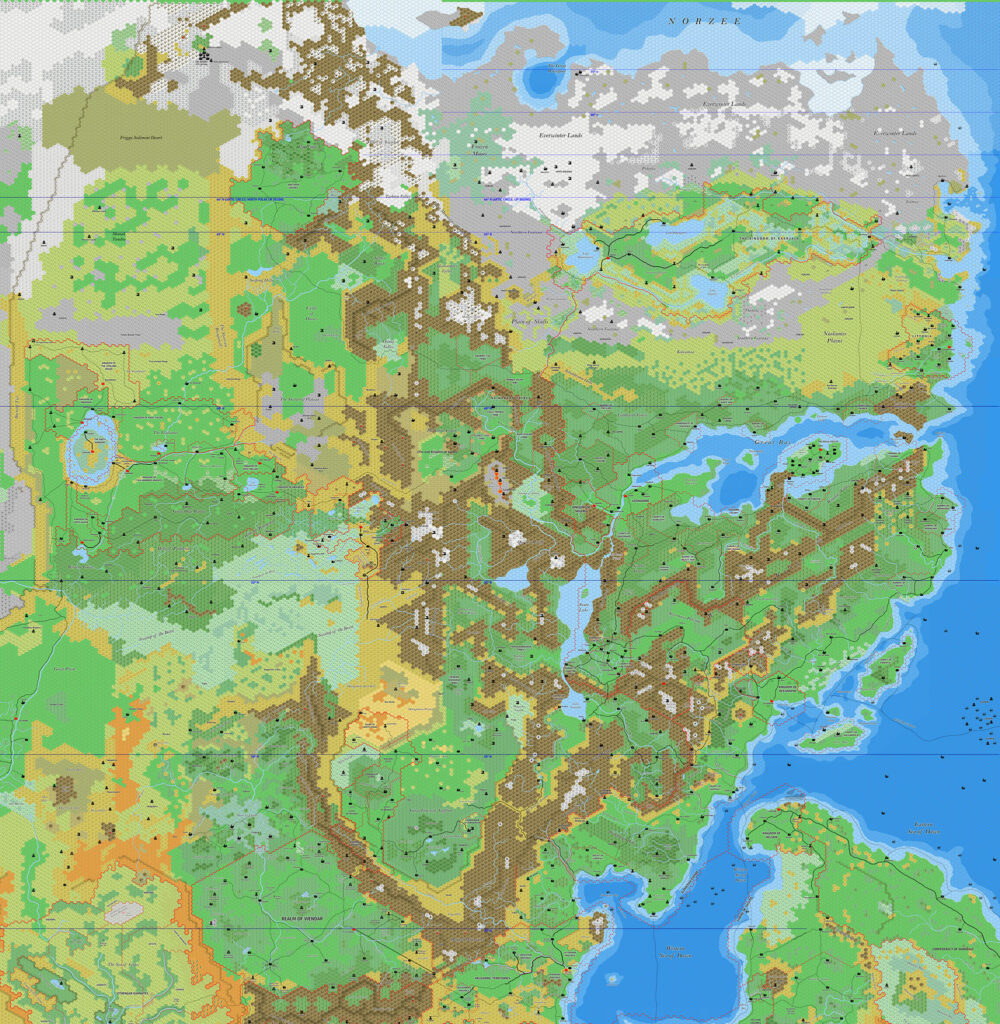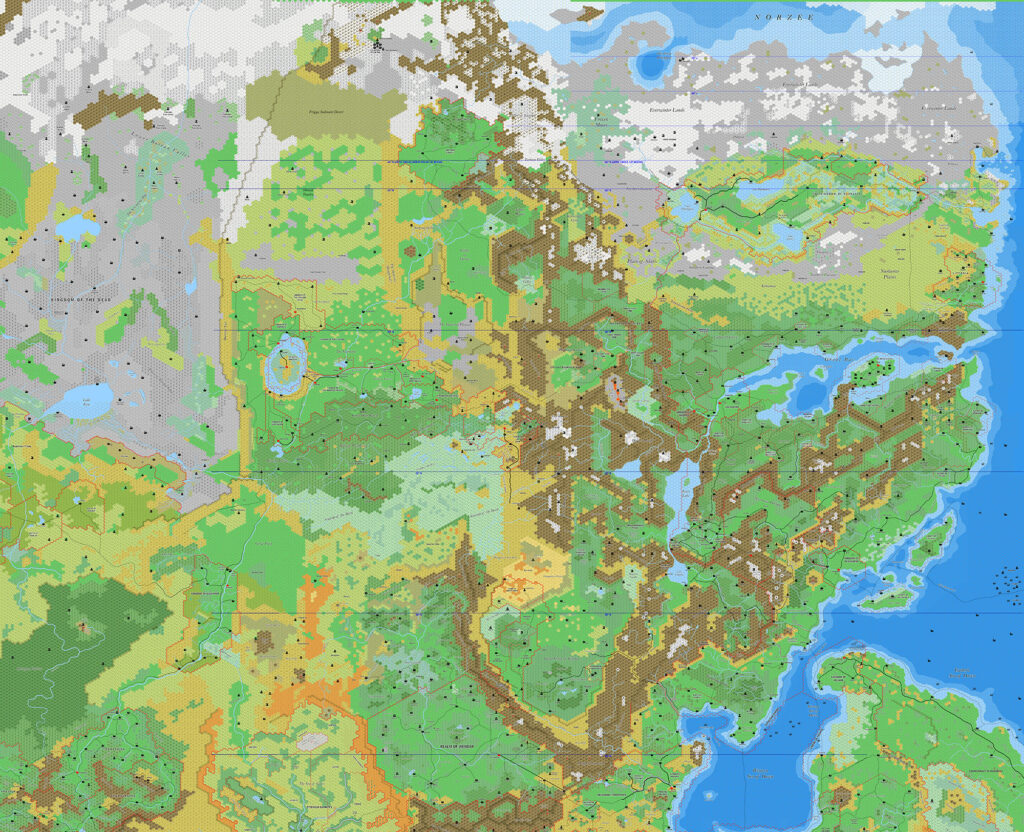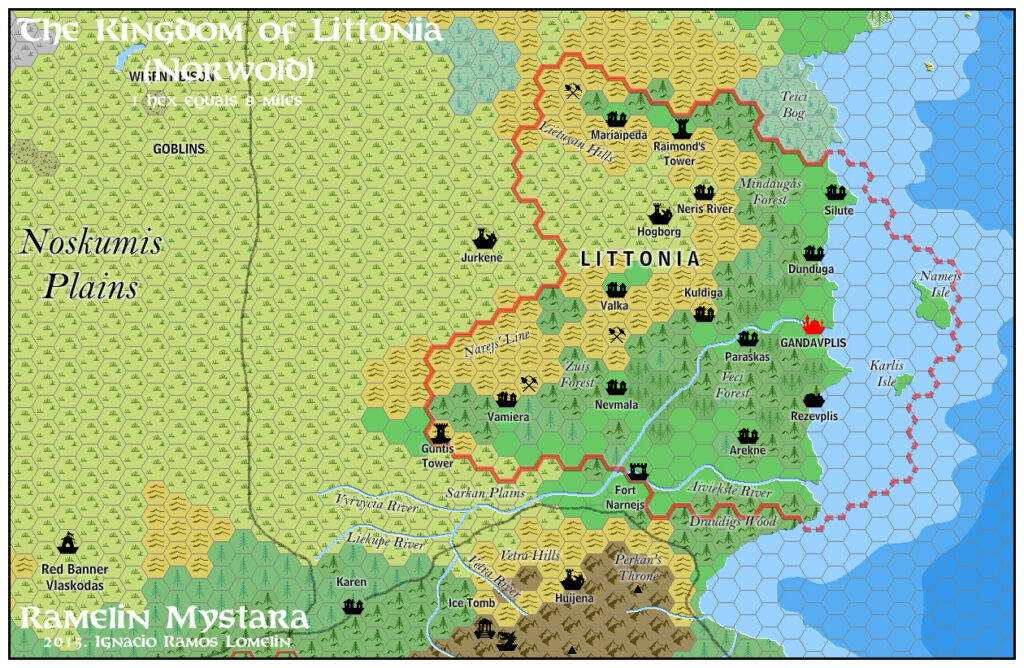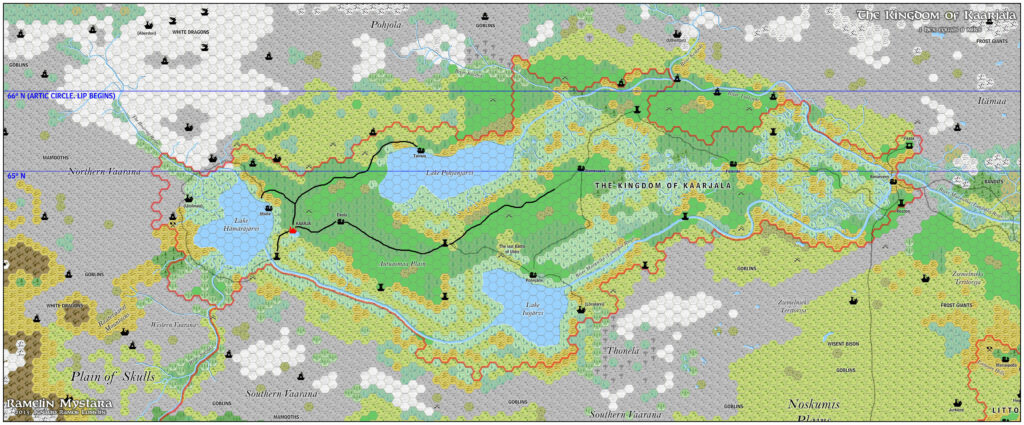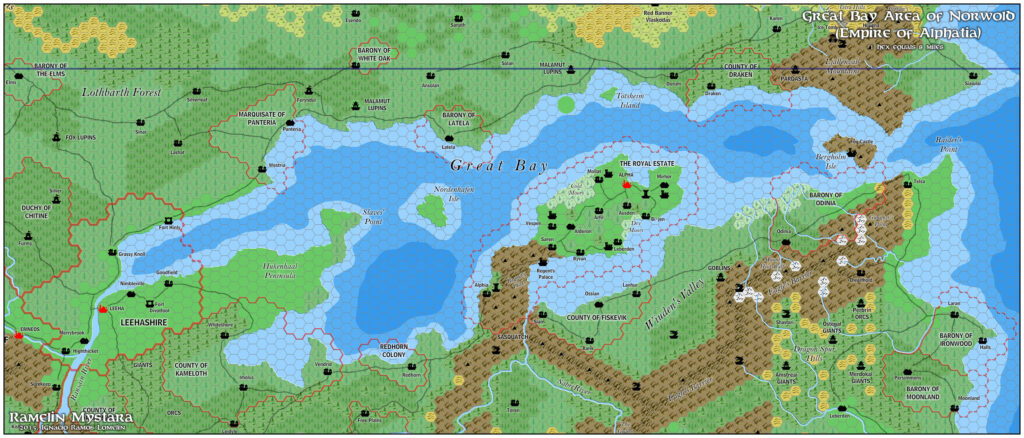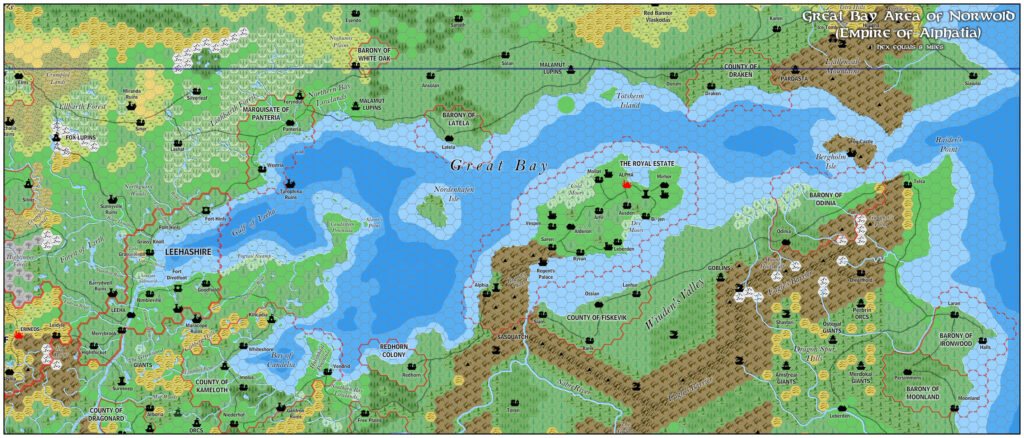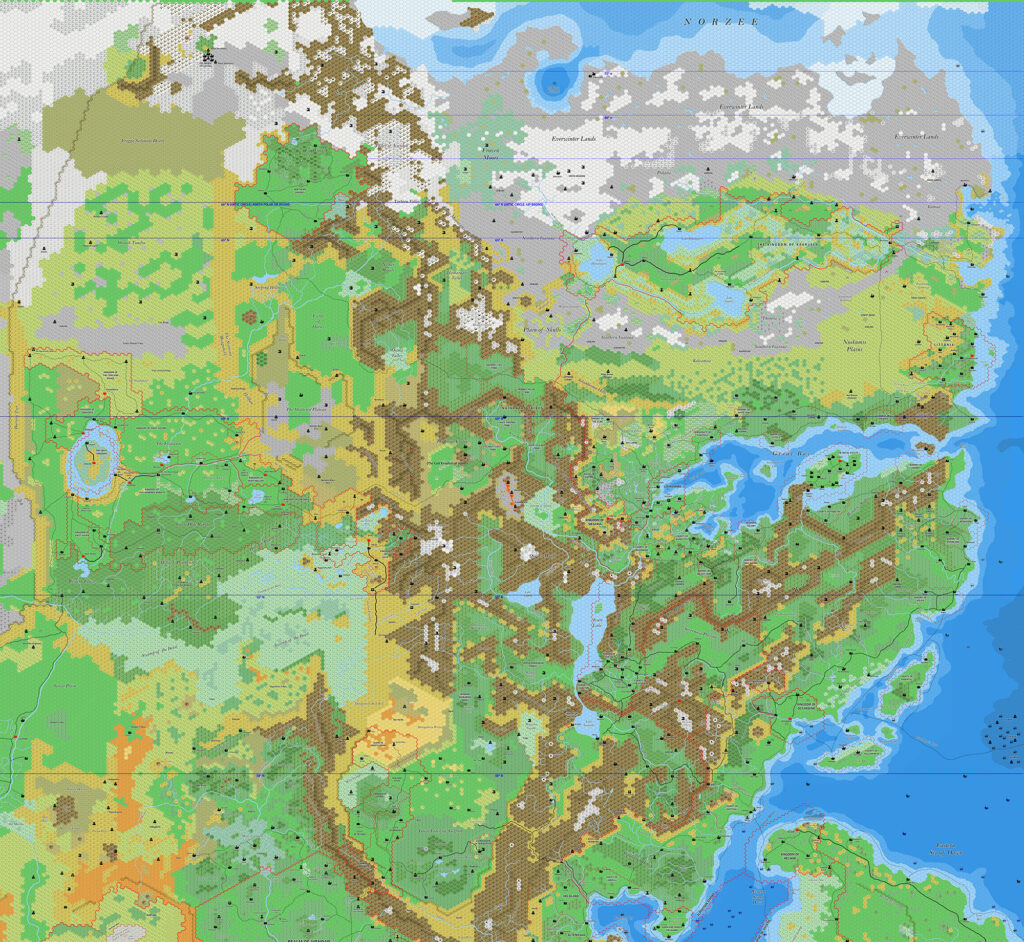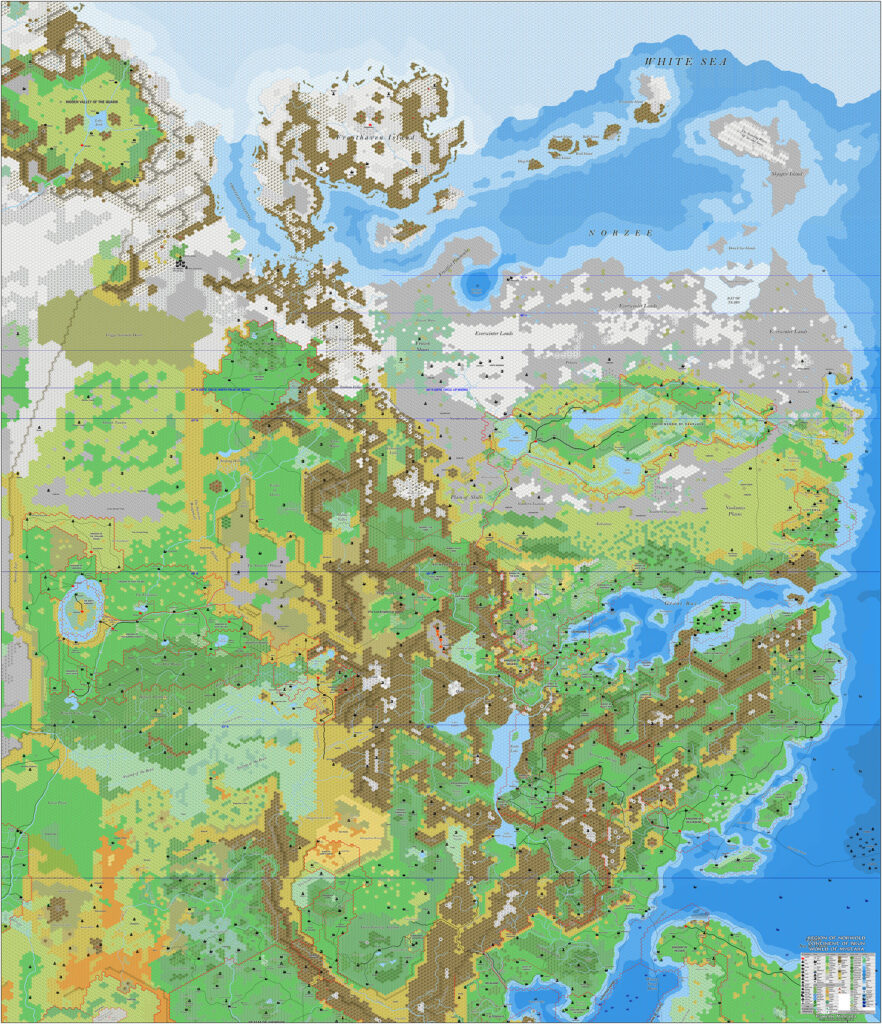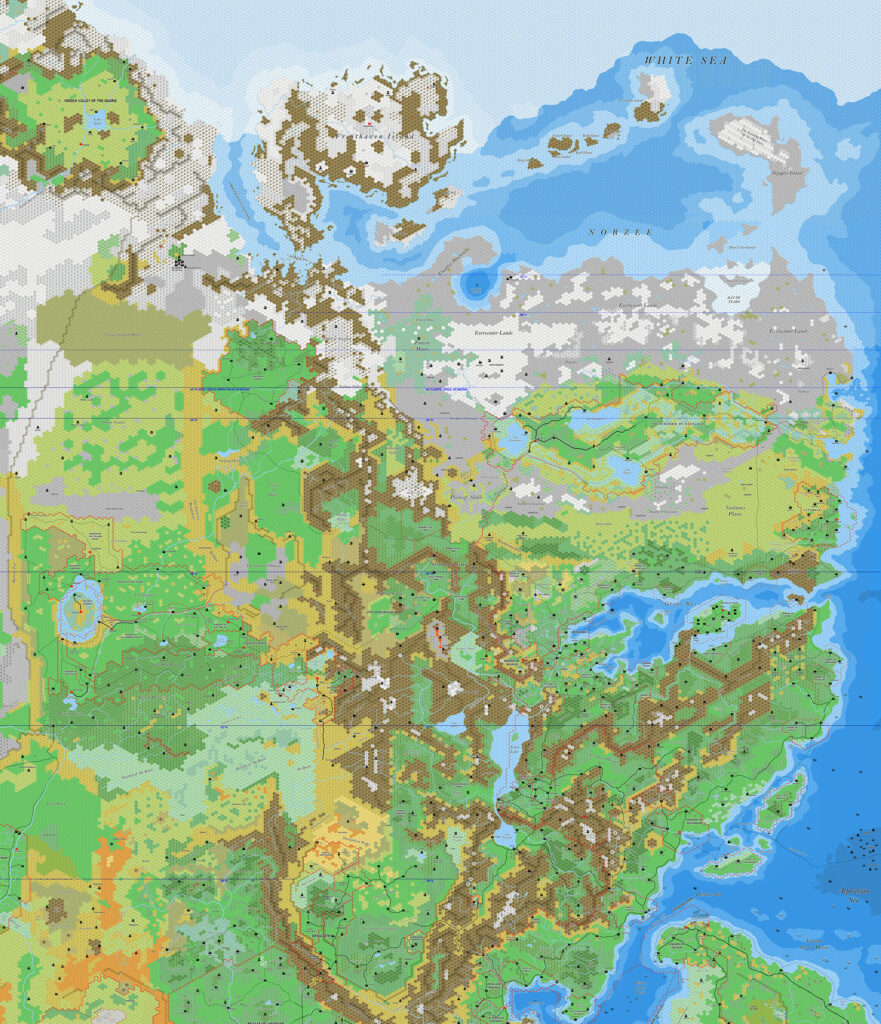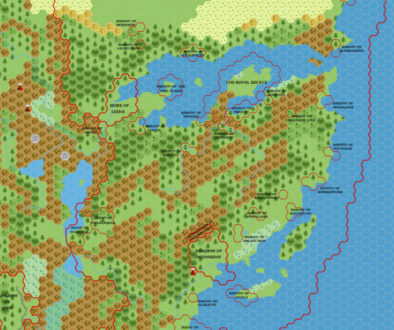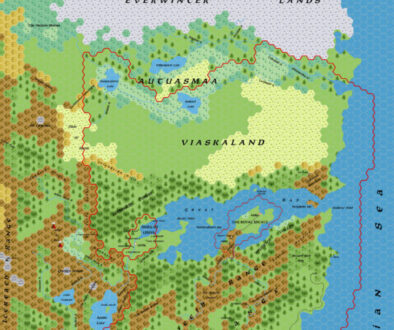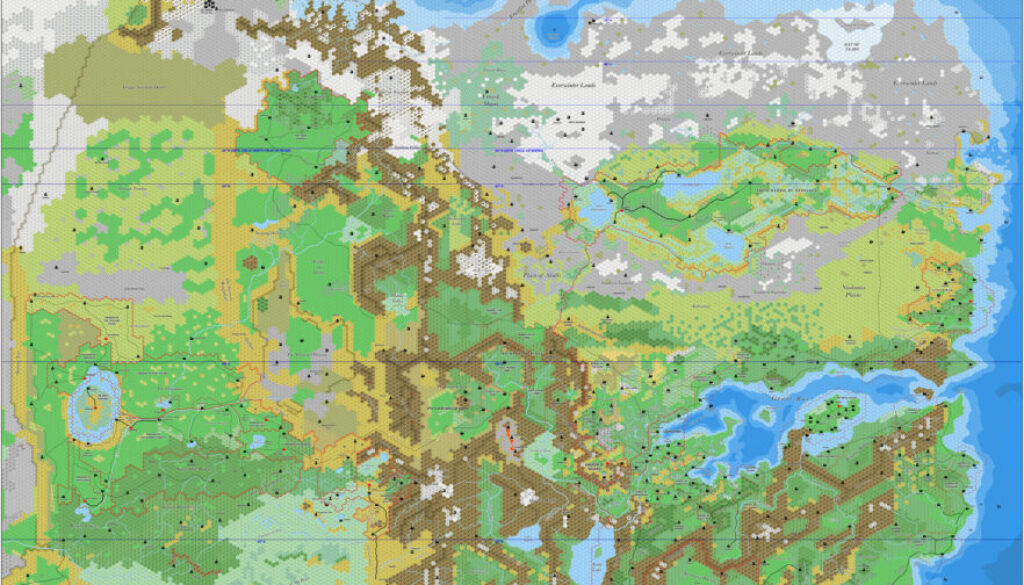
Ramelin’s Northeastern Brun, 8 miles per hex v4
Although this was the fourth iteration of this map, it was also the first version Jose shared publicly. He completed the map in January, but didn’t post it until March, at which time he added a title and put it on his DeviantArt page.
The main innovation in this map was the addition of the far north: the Hidden Valley of the Quarik, Frosthaven, and the islands north of Norwold. For the first time, the White Sea appears at the top of the map, along with a large area of sea ice. This was the first time for all of these things to be mapped at this scale, and Jose provided a lot of new details, features, and place names for the whole area.
There would be one more version of the map in early 2019.
Fan-made Map by Jose Ignacio Ramos Lomelin (March 2017)

This is an original map created by one of Mystara’s excellent fan cartographers. For more information on the cartographer, including a gallery of all their maps, see also Appendix M: Mappers of Mystara.
Sources
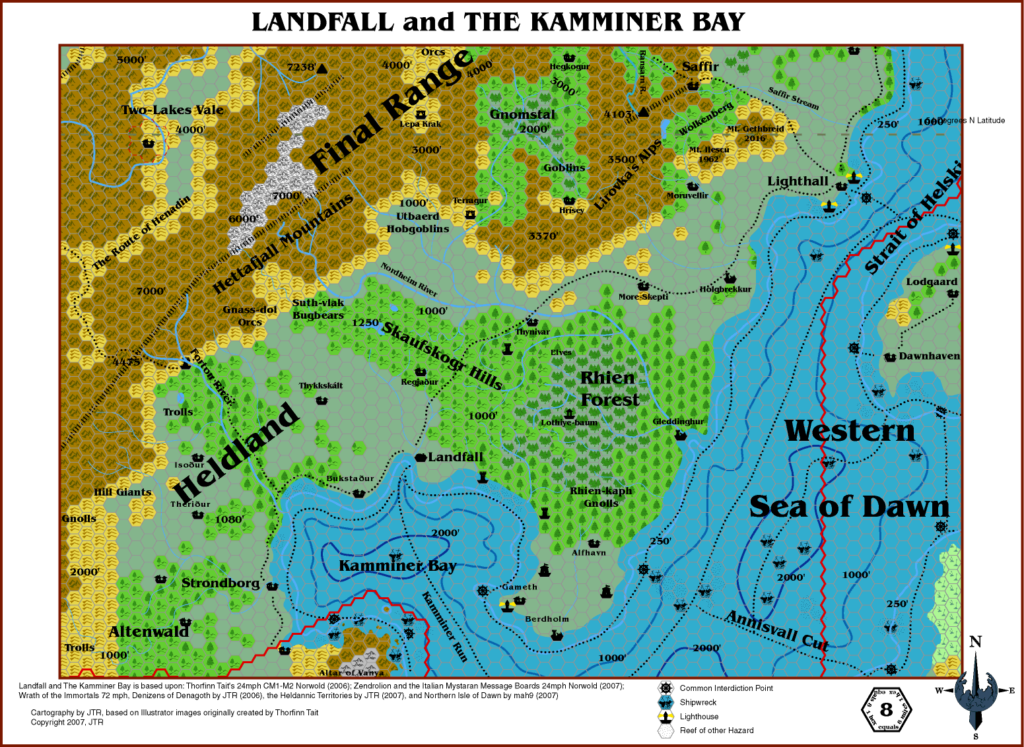
- CM1 Test of the Warlords (1984) (PDF at DriveThruRPG)
- X11 Saga of the Shadow Lord (1986) (PDF at DriveThruRPG)
Fan Sources
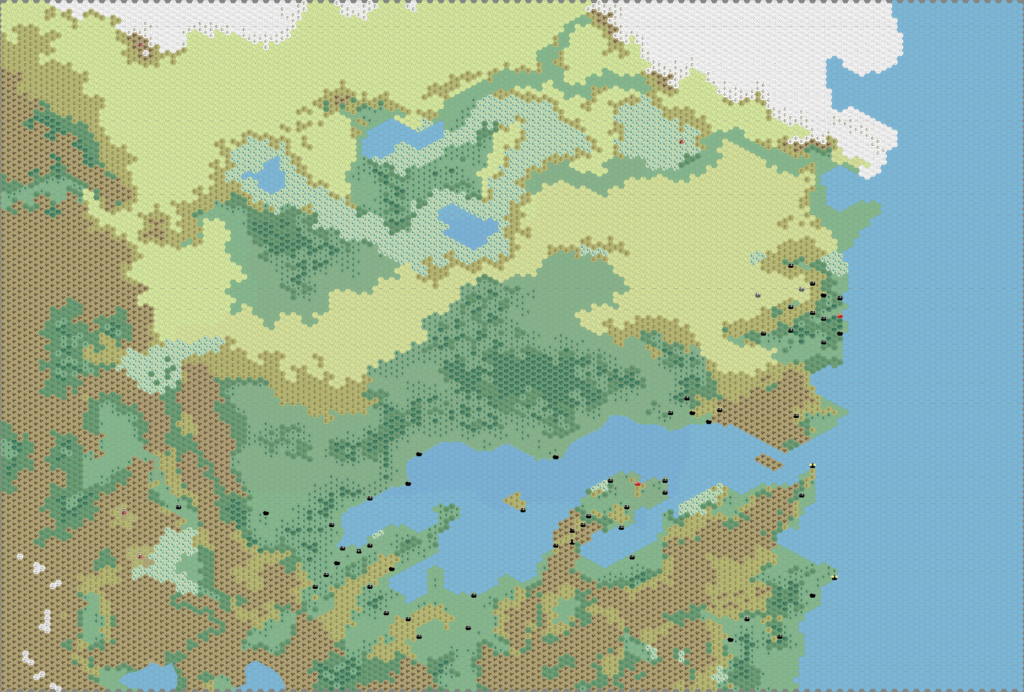
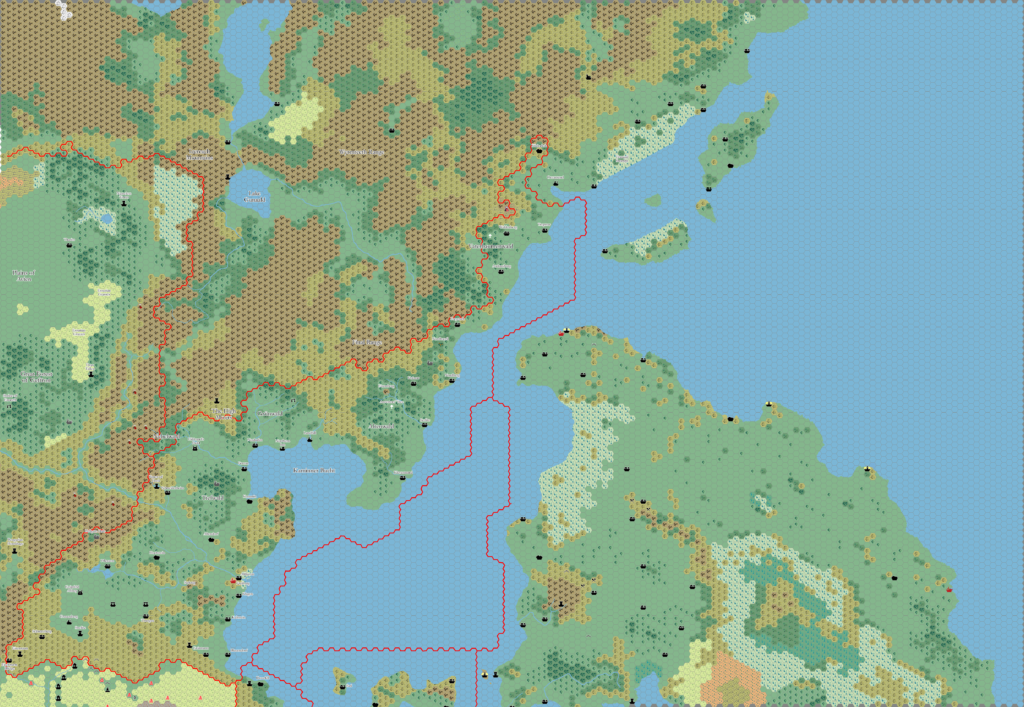
- Ramelin’s Northeastern Brun, 8 miles per hex v1 (January 2016)
- Ramelin’s Northeastern Brun, 8 miles per hex v2 (January 2016)
- Ramelin’s Northeastern Brun, 8 miles per hex v3 (December 2016)
References
- All of Jose’s maps at the Atlas of Mystara
- Jose’s entry in Appendix M: Mappers of Mystara (upcoming)
- Jose’s author page at the Vaults of Pandius
Chronological Analysis
This is a fan-made map. It was published in March 2017. The updated Atlas version of this map is not yet available. See also Appendix C for annual chronological snapshots of the area. For the full context of this map in Mystara’s publication history, see the upcoming Let’s Map Mystara 2017.
The following lists are from the Let’s Map Mystara project. Additions are new features, introduced in this map. Revisions are changes to previously-introduced features. Hex Art & Fonts track design elements. Finally, Textual Additions are potential features found in the related text. In most cases, the Atlas adopts these textual additions into updated and chronological maps.
Coming Soon